
The Wednesday That Went Sideways
Triage for when the plan falls apart
Most federal PMs don’t have a planning problem. They have a when-the-plan-falls-apart problem — and those are very different things.
I ran a session recently with a cohort of FAA program managers built around a single scenario I called “The Wednesday That Went Sideways.” The setup was deliberately ordinary: eight meetings, some breathing room, a backlog of investment analysis docs to chip away at. All manageable on paper.
Then I started adding what actually happens.
A text from the boss at 8:15. A Congressional data call at 9:15. An unplanned vendor cost meeting that ate the 10:30 slot, spawned a follow-up at 2:00, and required slides that didn’t exist yet. A design issue with Air Traffic that consumed the lunch hour. By 6 p.m., our fictional PM was making dinner and editing a Congressional response — redlines due by start of business the next morning.
The scenario was made up, but the reactions in the room told me it didn’t feel that way.
The Point Isn’t the Chaos
Here’s what I wanted the group to sit with: the scenario wasn’t about bad planning. It was a normal collision between plans and reality. The question isn’t whether your day will go sideways…it will. What matters is whether you have a system for navigating it when it does.
We spent the remainder of the session building that system, and a few things stuck with the group.
Ask Before You Build
If there’s one thing worth clipping from this piece, it’s this: three questions to ask before running with a request that landed out of nowhere, especially from someone without full visibility into your program.
- What does ‘done’ look like?
- When do you actually need this — not “ASAP,” but a real time?
- Who else should be involved?
That last one matters more than people think. In the scenario, the PM was the only person in the 10:30 vendor meeting, which meant only they had the context to build the follow-up slides. If someone else had been pulled in — even just to listen — the 2 p.m. prep could have been shared. One question asked early saves hours downstream.
A good rule of thumb: if the person tasking you can’t clearly answer what “done” looks like or when they need it, that’s your cue to slow down and clarify before you build.
Triage Before You Move
When something unexpected lands on your plate, most PMs default to one of two modes: drop everything and react, or add it to the pile and hope for the best. Neither holds up for long.
We practiced a simple triage using a framework from the session worksheet. Before you move on anything unplanned, run it through two questions:
- How urgent is this?
- How significant is the impact on your program?
Plot those against each other and you get four buckets:
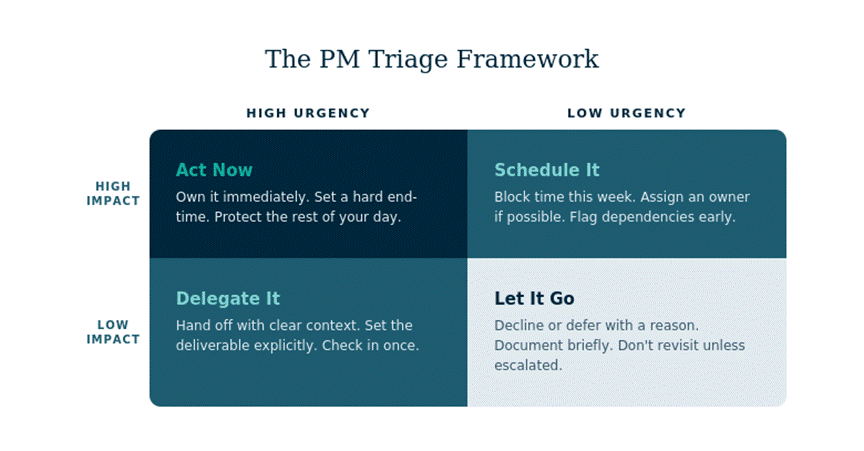
The framework is simple. Using it when your inbox is blowing up and someone’s standing in your doorway — that’s the hard part.In our Wednesday scenario, the Congressional data call was high-urgency, high-impact — act now. But the PM didn’t see it until 4 p.m. because they were buried in slide prep for a meeting that arguably could have been delegated or scoped differently. That’s a systems problem, not a character flaw.
Small Rituals Beat Big Plans
The third piece — and the one that generated the most conversation — was a daily planning ritual: a set of three micro-moments totaling under ten minutes.
- A five-minute morning check-in: name your one non-negotiable for the day, identify your highest-risk window, and pre-decide what you’d move if something urgent hits.
- A two-minute midday reset: what’s shifted, what’s been buried, who needs a heads-up.
- A three-minute close: what didn’t happen, what carries forward, and one thing to do first tomorrow.
The midday reset got the strongest reaction. It’s the most skipped and the most valuable. Even two minutes of stepping back and resetting changes the quality of your afternoon decisions.
So, What Now?
Your Wednesday is coming. Download the field guide and work through it before it does — triage your recurring fire drills, pressure-test your defaults with the three questions, and build a daily reset that fits your rhythm. Then pick one practice to start, one habit to stop, and someone to check in with in two weeks.
Or start smaller: what’s your midday reset practice? If you can’t name one, that’s the first thing to fix.
About the Author